
 ビール醸造のプロも愛読!ホップの魅力がわかる『THE NEW IPA』
 歴史好き必見!『ビール大全』で深掘り
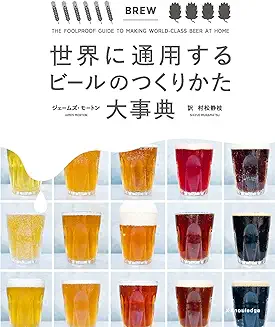 『ビールのつくりかた大事典』で醸造プロセスを学ぼう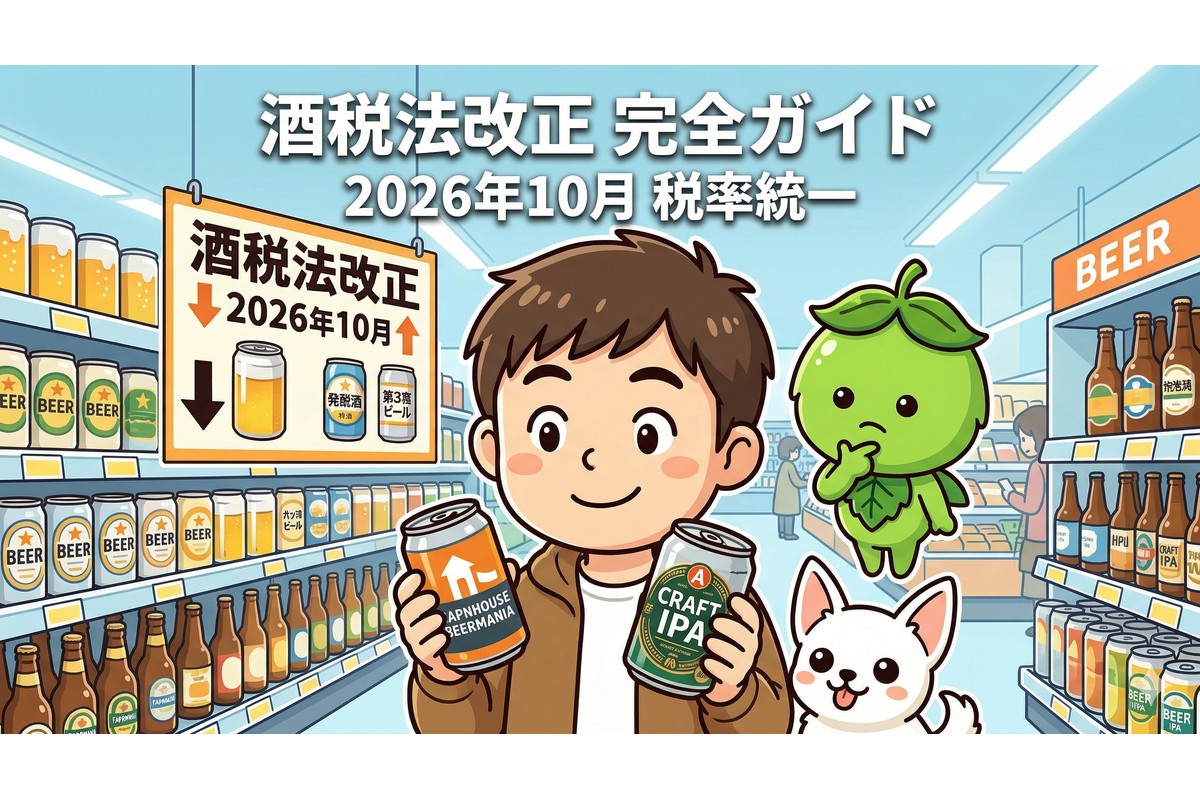
Hello everyone, I’m Riho, a craft beer enthusiast! In October 2026, Japan’s beer industry faces a historic transformation. The liquor tax on beer, happoshu (low-malt beer), and third-category beer (new genre) will finally be fully unified.
For craft beer fans, this reform is far more than just a tax policy change. The era of “choosing happoshu because it’s cheaper” is ending, and the age of competing on quality and character is truly beginning. Let me walk you through the full picture of the liquor tax reform and its impact on the craft beer industry!

The October 2026 tax unification is a really important piece of news for craft beer lovers. As the tax rates change, our whole approach to choosing beer could shift too!
- Background of the Liquor Tax Reform — Why Unify the Tax Rates?
- [Complete Guide] Tax Rate Change Timeline — What Changed in 3 Phases?
- How Major Brewers Are Responding — The “Beer Wars” Reignite!
- Impact on the Craft Beer Industry — Tailwind or Headwind?
- How Consumers Will Be Affected — What Should You Buy?
- Impact on Breweries and Businesses — Key Practical Points
- Notable Brewery Developments: YONA YONA TOKYO BREWERY and More
- FAQ — Frequently Asked Questions
- Q1. How specifically will beer prices change with the October 2026 tax reform?
- Q2. Will third-category beer (new genre) disappear?
- Q3. Will craft beer prices also increase?
- Q4. What’s the future of Japan’s craft beer market?
- Q5. Do craft breweries with happoshu licenses need to re-apply?
- Q6. Will chuhai and canned sour tax rates also change?
- Conclusion — October 2026: A Historic Turning Point for Beer Lovers
Background of the Liquor Tax Reform — Why Unify the Tax Rates?
Why were different tax rates applied to beer-type beverages in the first place? Looking back at the history makes the significance of this reform clear.
In the late 1980s, happoshu (low-malt beer) emerged in Japan as an alternative to heavily taxed beer, created by reducing the malt content. This was essentially tax-driven product development. Then in the 2000s, third-category beer (new genre) — which uses no malt at all — exploded in popularity as an even cheaper option.
However, these tax rate disparities severely undermined fairness in the tax burden across similar alcoholic beverages. The Ministry of Finance noted that “tax rate differences between similar beverages have influenced product development and sales volumes,” and in 2018, amended the Liquor Tax Act. This set October 2026 as the final target for phased tax rate unification.

The history of Japan’s liquor tax is fascinating! Happoshu and third-category beer were born as “tax-saving products” and took over the market. Major brewers spent decades competing through tax-rate arbitrage rather than brewing quality. The 2026 unification finally puts an end to that era!
[Complete Guide] Tax Rate Change Timeline — What Changed in 3 Phases?
Since the 2018 Liquor Tax Act amendment, beer-type beverage tax rates have changed in three phases. Let’s look at the tax per 350ml can:
| Beverage | Pre-Reform (~Sep 2020) | Phase 1 (Oct 2020~) | Phase 2 (Oct 2023~) | Final Unification (Oct 2026~) |
|---|---|---|---|---|
| Beer | 77 yen | 70 yen | 63.35 yen | 54.25 yen |
| Happoshu (malt ratio 25-50%) | 46.99 yen | 46.99 yen | 46.99 yen | 54.25 yen |
| Third-Category Beer (New Genre) | 28 yen | 37.8 yen | 46.99 yen | 54.25 yen |
| Chuhai/RTDs (Other Sparkling Beverages) | 28 yen | 28 yen | 28 yen | 35 yen |
Beer sees a gradual 30% tax reduction from 77 yen to 54.25 yen. Meanwhile, third-category beer faces a near doubling of tax from 28 yen to 54.25 yen. This change will significantly affect retail prices for 350ml cans.
Estimated price changes (tax-inclusive):
- A 220-yen beer → approximately 197 yen (about 23 yen decrease)
- A 140-yen third-category beer → approximately 166 yen (about 26 yen increase)
- Chuhai 350ml → approximately 7-8 yen increase
The key takeaway is that beer gets cheaper while third-category beer gets more expensive! After the unification, the long-held assumption that “beer is more expensive than third-category” breaks down. This is great news, especially for beer loyalists!
How Major Brewers Are Responding — The “Beer Wars” Reignite!
Ahead of the tax unification, Japan’s major beer companies have announced bold strategic pivots.
Suntory’s “Kin Mugi” Gets Upgraded to Beer
Suntory has announced that from October 2026, the popular “Kin Mugi” series will be converted from a new genre (happoshu) product to a genuine beer. They will raise the malt ratio from under 50% to over 50% to meet the legal definition of beer. Regarding pricing, they plan to pass on only the tax increase, maintaining prices comparable to current new genre levels.
Kirin’s “Hon Kirin” Also Becomes Beer
Kirin Beer also announced at their January 2026 business briefing that “Hon Kirin” will be reclassified as beer in the second half of 2026. They will raise the malt ratio above 50% and eliminate the use of malt-derived distilled spirits. This expands Kirin’s beer category alongside their flagship “Ichiban Shibori.”
Industry-Wide Investment in Beer
Asahi, Sapporo, Yebisu, and other brewers are also accelerating investment in the beer category ahead of October 2026. The “budget segment market” that formerly centered on happoshu and third-category beer is disappearing, giving way to genuine competition on beer quality. Toyo Keizai Online has described this as “the reignition of the Beer Wars.”
It feels a bit strange to think of Kin Mugi and Hon Kirin becoming “real beer.” But from a consumer standpoint, being able to drink actual beer at around the same price is definitely a positive.
Impact on the Craft Beer Industry — Tailwind or Headwind?
The tax reform is expected to create significant opportunities for the craft beer industry.
1. Consumer Shift: “From Price to Taste”
Consumers who previously chose happoshu or third-category beer “because it’s cheaper” will now be able to choose based on taste rather than price. Craft beer has always been about “character, quality, and story” — and this shift creates a favorable environment for the entire industry.
The CEO of Best Beer Japan has predicted that “the tax reform could push the market beyond 100 billion yen.” This represents significant growth from Japan’s current craft beer market size of approximately 80-90 billion yen.
2. Happoshu License Protection — Small Breweries Can Relax
A key concern for the craft beer industry was the license renewal problem. Many small breweries operate under a “happoshu” (low-malt beer) manufacturing license because obtaining a full beer license requires meeting high minimum production volume thresholds.
The reform has carefully addressed this concern. A special provision states that products classified as happoshu at the time of license issuance may continue to be produced and sold under the happoshu license, even if they would qualify as beer under the new law. Japan’s 800+ craft breweries don’t need to re-apply for licenses, and their operations remain unaffected.
3. Expanded Beer Ingredient Definition and Greater Diversity
The combination of the 2018 beer definition revision and the 2026 tax unification means that beers using adjuncts like spices, fruits, coffee, and honey can now be distributed as “beer.” This is extremely positive for craft beer diversity.
In Japan’s craft beer market, 2026 trends show rapid growth in “fruit beers,” “spiced beers,” and “Japanese ingredient beers,” with synergistic effects from the tax reform anticipated.
4. Increased Competition with Chuhai/RTDs
There are challenges, too. After October 2026, the tax gap between beer (54.25 yen) and chuhai/RTDs (35 yen) widens to approximately 19 yen. In the budget segment, chuhai and sours become even more price-competitive, potentially driving demand toward Ready-to-Drink products.
However, craft beer’s customer base primarily seeks “quality, story, and experience” — so direct competition with chuhai is expected to be limited.
The fact that happoshu-licensed breweries won’t need to re-obtain licenses is truly crucial! Most of Japan’s 850+ breweries operate under happoshu licenses, so without this provision, the industry could have been thrown into chaos. Well done, Ministry of Finance!
How Consumers Will Be Affected — What Should You Buy?
How will consumers’ alcohol purchasing habits change after October 2026?
Good News for Beer Drinkers
Regular beer buyers (350ml cans around 220 yen) will enjoy lower prices. Additionally, as Kin Mugi, Hon Kirin, and similar products become “beer,” genuine beer will be available at prices comparable to current third-category products.
What About Third-Category Beer Drinkers?
For those who primarily drank third-category beer to save money, the price increase is unwelcome. After the tax unification, two realistic options emerge:
- Switch to beer (newly reclassified products like Kin Mugi or Hon Kirin) as the price gap narrows
- Opt for chuhai/sours (35-yen tax rate) to keep costs down
Craft Beer Becomes “Easier to Choose”
Craft beer pricing (typically 400-700 yen per 350ml can) won’t change dramatically after unification. However, the psychological shift of “beer moving up in status” is significant. The motivation to “splurge on real beer” will likely boost interest in craft beer.
For those looking to explore craft beer, check out our Japan Craft Beer Market News and information on breweries across Japan.
Impact on Breweries and Businesses — Key Practical Points
For craft breweries and liquor retailers, the October 2026 reform has the following practical implications.
Watch Inventory Management and Procurement Timing
Liquor tax is levied at the point of production (shipment from the brewery) or import. Products manufactured before September 30, 2026, will be taxed at the old rate. Since inventory tax amounts change around the reform date, procurement and inventory management need to be reviewed.
Update Price Displays
Restaurants and retailers selling alcohol need to update tax-inclusive price displays from October 1, 2026. Particular attention should be paid to consumer reactions regarding happoshu and third-category beer price increases.
Craft Brewery Licenses — No Changes Needed
As mentioned, craft breweries operating under happoshu licenses do not need to change or renew their licenses. However, anyone planning to open a new brewery should review the current requirements for both beer and happoshu manufacturing licenses.
For information on craft breweries across Japan, visit our Craft Beer Event Calendar, which is regularly updated.

Woof woof! (Rune-chan wants to be near craft beer too!)
Notable Brewery Developments: YONA YONA TOKYO BREWERY and More
It’s worth watching how craft breweries expected to benefit from the tax reform are positioning themselves. The YONA YONA TOKYO BREWERY, which opened in Shinagawa in March 2026, is one example. New breweries are opening across the country at a brisk pace.
Additionally, sake brewers entering the craft beer market is becoming more common. The tax unification is expected to further expand the diversity of beer ingredients and styles, driving growth across the entire craft beer industry.
FAQ — Frequently Asked Questions
Q1. How specifically will beer prices change with the October 2026 tax reform?
A. The tax on beer (350ml can) drops from 63.35 yen to 54.25 yen — a reduction of about 9 yen. If reflected in retail prices, a current 220-yen beer could become approximately 197-210 yen. Actual prices will depend on individual manufacturer pricing strategies.
Q2. Will third-category beer (new genre) disappear?
A. The third-category beer product category isn’t being legally abolished, but its price advantage will vanish. Products like Suntory’s “Kin Mugi” and Kirin’s “Hon Kirin” are already being reformulated as beer. The concept of “third-category beer” is expected to effectively fade away.
Q3. Will craft beer prices also increase?
A. Most craft beers are produced under either “beer” or “happoshu” licenses. Those produced as beer will see a slight price decrease from October 2026. Those produced as happoshu may see a minor increase. Either way, the price change is expected to be relatively small.
Q4. What’s the future of Japan’s craft beer market?
A. The tax unification will make it easier for a beer culture based on quality, character, and story to take root. Best Beer Japan predicts the market could exceed 100 billion yen. With over 850 breweries nationwide, as analyzed in our 2026 Craft Beer Top 5 Trends, this is the best time ever to enjoy craft beer in Japan.
Q5. Do craft breweries with happoshu licenses need to re-apply?
A. No. The 2026 tax reform includes a special provision allowing products that were classified as happoshu at the time of license issuance to continue being produced and sold under the happoshu license. Small-scale craft breweries nationwide can continue operating as-is.
Q6. Will chuhai and canned sour tax rates also change?
A. Yes. Chuhai/RTDs (other sparkling beverages) will see a tax increase from 28 yen to 35 yen per 350ml in October 2026. However, the tax gap with beer (54.25 yen) remains approximately 19 yen, so chuhai will continue to be taxed at a lower rate.
Conclusion — October 2026: A Historic Turning Point for Beer Lovers
The October 2026 liquor tax reform carries significance far beyond a simple tax rate change. It represents a major cultural shift in Japan: “from choosing by price to choosing by quality and character.”
The winds are favorable for craft beer enthusiasts. The happoshu license protection, expanded ingredient definitions, and the end of price-driven competition — all of these factors will enrich Japan’s craft beer market.
With less than six months to go until October, now is the perfect time to find your new favorite craft beer. For brewery visit reports from across Japan, visit our Japan Craft Beer Market News, updated regularly!
October 2026 marks the beginning of an era when drinking real beer becomes the best value. I’m excited for the entire craft beer industry to thrive, and I’ll keep visiting breweries across Japan! Cheers!

 Twitterで新着情報を受け取る
この記事が気に入ったら、「Next Pint!」ボタンを押してください!
rihobeerをフォローする
Instagramでは最新記事をいち早く配信、Xではビール情報をリアルタイムに発信しています。