 ビール醸造のプロも愛読!ホップの魅力がわかる『THE NEW IPA』
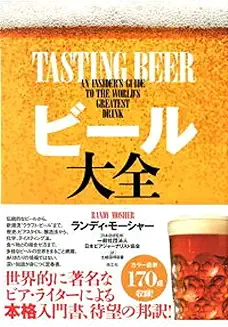 歴史好き必見!『ビール大全』で深掘り
 『ビールのつくりかた大事典』で醸造プロセスを学ぼう

- Full List: Japanese Brewery Winners at World Beer Cup 2026
- Nara Brewing’s Double Gold — The Biggest Surprise of 2026
- Kirin’s “Spring Valley” Takes Gold + Silver — The Big-Brewer Comeback
- Japan’s WBC History in Data (1996–2026)
- Deep Dive: Full Cross-Competition Medal History of Japan’s 12 WBC 2026 Winners
- The Kansai Surge — Regional Craft Proves Its Strength
- Japanese Ingredients on the Global Stage — Sansho, Yuzu, Sencha
- Behind the Scenes: Visit Reports from Winning Breweries
- Analysis: Three Directions Japan’s 2026 Result Points To
- The Full WBC 2026 Picture — Explore the Data
- Frequently Asked Questions
- Closing Thoughts
Full List: Japanese Brewery Winners at World Beer Cup 2026
This article is based on the official PDF (WBC26-Winners-List-1.pdf), from which we databased all 353 winners and aggregated the Japanese brewery results by country, medal, and category. The fully searchable dataset is published at our Awards Database.
🏆 Gold — 5 Winners
| Category | Beer | Brewery | Location |
|---|---|---|---|
| American-Style Wheat Beer | Silk Ale White | Spring Valley Brewery (Kirin) | Shibuya, Tokyo |
| Herb and Spice Beer | Sansho Lager | Craftrock Brewing | Hachioji, Tokyo |
| Experimental India Pale Ale | Flint | Bighand Bros. Brewery | Nishijin, Kyoto |
| American-Belgo-Style Ale | Function | Nara Brewing Co. | Nara |
| Session Beer | Lighthouse | Nara Brewing Co. | Nara |
🥈 Silver — 4 Winners
| Category | Beer | Brewery | Location |
|---|---|---|---|
| German-Style Pilsener | Southern German Style Pilsener | Craft Beer Base | Osaka |
| American-Style Amber Lager | Hojun Lager 496 | Spring Valley Brewery | Shibuya, Tokyo |
| Fruited Wood- and Barrel-Aged Sour Beer | AJB Cassis Barrel | Anglo Japanese Brewing Co. | Nozawa Onsen, Nagano |
| Classic Irish-Style Dry Stout | Minoh Beer Stout | Minoh Brewery | Minoh, Osaka |
🥉 Bronze — 3 Winners
| Category | Beer | Brewery | Location |
|---|---|---|---|
| Experimental India Pale Ale | Conix Brut IPA | Repubrew | Mishima, Shizuoka |
| West Coast-Style Pilsener | Uchu Pils | Uchu Brewing | Hokuto, Yamanashi |
| Specialty Saison | Chakabuki | Yamorido | Kyoto |
Nara Brewing’s Double Gold — The Biggest Surprise of 2026

Nara Brewing is a mid-size brewery known for its signature style of aging beers on-site in its taproom. Winning Gold with two beers that head in entirely different directions — Function (a Belgian-style hybrid ale) and Lighthouse (a session beer) — is a rare feat for any Japanese brewery in WBC history.
Remarkably, 2026 marks Nara Brewing’s first-ever WBC appearance — and they took home double Gold on debut.
In terms of cumulative WBC medals for Japanese breweries, the top spots go to Spring Valley Brewery (5 medals across 2023–2026) and Minoh Brewery (4 medals across 2024–2026). Yokohama Bay Brewing Co. and Bighand Bros. Brewery are tied at 3 medals each.
Looking at Gold medals alone, Yokohama Bay Brewing Co., Bighand Bros., and Nara Brewing are all tied at 2. But when it comes to double Gold in a single year, Nara Brewing is the undisputed star of 2026.
Kirin’s “Spring Valley” Takes Gold + Silver — The Big-Brewer Comeback
Spring Valley Brewery, operated by beer giant Kirin, won Gold with Silk Ale White and Silver with Hojun Lager 496. Until 2024, opinion was split on “craft from a major brewer,” but this year’s results make the quality crystal clear on the U.S. competition stage.
Kirin is known in the brewing-science world for developing the “Dip Hop method” — a technique that suppresses the grassy myrcene notes of conventional hopping while maximizing citrusy linalool-derived flavors. Whether the Hojun Lager line uses this method specifically depends on official disclosure, but Spring Valley’s recent surge is almost certainly rooted in Kirin’s R&D firepower. We cover the details in our Kirin “Dip Hop Method” research summary.
Japan’s WBC History in Data (1996–2026)
Using the Awards Database we maintain at rihobeer.com (46,294 entries total), we extracted Japan’s year-by-year WBC medal counts. The explosive growth in the late 2020s is unmistakable.
| Year | Japan Medals | Gold | Silver | Bronze | Notable Winners |
|---|---|---|---|---|---|
| 2008 | 2 | 0 | 0 | 2 | Nasu Kohgen / Baird Brewing |
| 2014 | 1 | 1 | 0 | 0 | Asahi Super Dry (Gold, International-Style Lager) |
| 2022 | 3 | 2 | 0 | 1 | Aqula Akita / Miyazaki Hideji / Far Yeast |
| 2023 | 3 | 0 | 2 | 1 | Miyazaki Hideji / Yamori Shuzo / SVB |
| 2024 | 6 | 2 | 2 | 2 | Yokohama Bay Gold / Bighand Gold |
| 2025 | 7 | 2 | 1 | 4 | Yokohama Bay Gold / Minoh Gold |
| 2026 | 12 | 5 | 4 | 3 | Nara Brewing Double Gold / Kansai 6 medals |
Until 2022, Japan was stuck in the 2–3 medals-per-year range. Starting with 6 medals in 2024, Japanese breweries broke into double-digit territory, and 2026 finally reached 12. That’s a 4x jump in just three years.
Japan’s All-Time WBC Leaders (1996–2026)
| Rank | Brewery | Total | Gold | Silver | Bronze | Years Won |
|---|---|---|---|---|---|---|
| 1 | Spring Valley Brewery (Kirin) | 5 | 1 | 1 | 3 | 2023, 2024, 2025, 2026 |
| 2 | Minoh Brewery | 4 | 1 | 1 | 2 | 2024, 2025, 2026 |
| 3 | Bighand Bros. Brewery | 3 | 2 | 0 | 1 | 2024, 2025, 2026 |
| 3 | Yokohama Bay Brewing Co. | 3 | 2 | 1 | 0 | 2024, 2025 |
| 5 | Nara Brewing Co. | 2 | 2 | 0 | 0 | 2026 |
| 5 | Miyazaki Hideji Beer Co. | 2 | 1 | 1 | 0 | 2022, 2023 |
What’s striking is Nara Brewing vaulting straight into a tie for 5th place on their first WBC appearance, and the rapid rise that puts them in a 3-way Gold-medal tie with Yokohama Bay and Bighand. Spring Valley leads in total medal count, but 3 of their 5 are Bronze, and their first-ever Gold only came this year with Silk Ale White. In terms of single-year quality, Nara Brewing is ahead.
And in 2010, Baird Brewing swept three Golds with Country Girl Kabocha Ale, Saison Sayuri, and Numazu Lager. Japanese craft beer has been earning international recognition for over two decades.
The 2014 Asahi Super Dry Gold (International-Style Lager) is symbolically significant as a big-brewer victory, but it’s better understood as a milestone in a long history rather than “Japan’s first Gold.” Combined with the sharp rise in small-craft wins through the mid-2020s, the last quarter-century has been a steady build-up of international reputation across the entire Japanese beer landscape.
Deep Dive: Full Cross-Competition Medal History of Japan’s 12 WBC 2026 Winners
Using our Awards Database (10 competitions, 46,294 entries), we aggregated the cross-competition medal totals (GABF / WBC / JGBA / IBC / BBC / EBS / USOB / AIBA / ABC / NYIBC) for all 10 Japanese breweries behind this year’s 12 WBC wins. This reveals the “real strength” that WBC alone can’t show.
| Brewery | All-Comp Total | Breakdown | WBC | Notes |
|---|---|---|---|---|
| Spring Valley Brewery (Kirin) | 139 | JGBA 53 / AIBA 35 / IBC 34 / WBC 5 / BBC 5 / EBS 5 / ABC 2 | 5 | Dominant presence at home and abroad. A symbol of Japanese beer’s internationalization. |
| Craft Beer Base | 45 | JGBA 33 / IBC 8 / WBC 2 / AIBA 1 / EBS 1 | 2 | A JGBA regular from Osaka. Broke into the international stage in 2026. |
| Repubrew | 16 | JGBA 8 / IBC 4 / AIBA 3 / WBC 1 | 1 | Shizuoka powerhouse, consistently recognized across both domestic and international comps. |
| Minoh Brewery | 21 | IBC 16 / WBC 4 / AIBA 1 | 4 | Two decades of international awards starting with IBC in 2006. |
| Bighand Bros. Brewery | 5 | WBC 3 / IBC 2 | 3 | IBC Bronze 2023–2024 → WBC Gold 2024 & 2026. Domestic and international breakthroughs at once. |
| Nara Brewing Co. | 6 | JGBA 3 / WBC 2 / IBC 1 | 2 | From JGBA Gold 2020 (QUO VADIS) and IBC Silver to double WBC Gold six years later. |
| Anglo Japanese Brewing Co. | 5 | IBC 4 / WBC 1 | 1 | Two Golds + two Bronzes at IBC 2019–2020 → WBC Silver 2026 takes them stateside. |
| Uchu Brewing | 2 | WBC 2 | 2 | Back-to-back WBC wins: 2025 Gold (UCHU Relax) → 2026 Bronze (Uchu Pils) |
| Craftrock Brewing | 1 | WBC 1 | 1 | WBC 2026 is their first medal at any of the 10 tracked competitions — and it’s Gold. |
| Yamorido | 1 | WBC 1 | 1 | WBC 2026 is their first medal at any of the 10 tracked competitions — Bronze. |
Three points stand out:
- Spring Valley’s 139 medals are on another level: 53 JGBA wins, 35 AIBA wins, 34 IBC wins — this level of sustained success across major domestic and international competitions is extraordinary. It’s the payoff of Kirin’s R&D capability combined with long-term competition participation, making Spring Valley the flagship for Japanese beer on the world stage.
- Craft Beer Base’s hidden depth: Osaka’s Craft Beer Base grabs headlines for their 2026 WBC Silver, but with 33 wins at JGBA and 45 total across all competitions, they’re actually one of the most decorated veterans on the Japanese domestic circuit. 2026 is better described as their serious debut on the international stage.
- Uchu Brewing’s back-to-back WBC wins: Gold in the Juicy or Hazy Pale Ale category in 2025 (UCHU Relax), Bronze in West Coast-Style Pilsener in 2026 (Uchu Pils). While our lead section only covers 2026, in terms of consecutive WBC wins, Uchu is one of the most consistent Japanese breweries.
Craftrock Brewing and Yamorido are both earning their first medal at any of the 10 tracked international competitions with WBC 2026. It’s a major inflection point — newer entrants to Japan’s craft scene earning international recognition.
Meanwhile, Nara Brewing (JGBA Gold 2020, IBC Silver 2020), Anglo Japanese (2 Golds + 2 Bronzes at IBC 2019–2020), and Craft Beer Base (33 JGBA + 8 IBC wins) are established domestic and international players who finally hit the WBC spotlight this year.
The Kansai Surge — Regional Craft Proves Its Strength
The Kansai concentration at WBC 2026 breaks down like this:
- Nara: Nara Brewing (2 Gold)
- Osaka: Craft Beer Base (1 Silver), Minoh Brewery (1 Silver)
- Kyoto: Bighand Bros. Brewery (1 Gold), Yamorido (1 Bronze)
Historically, Kansai was thought of as “big-brewer territory.” But through the late 2020s, small-batch craft breweries have taken off, and the region now outperforms the national average on the U.S. competition stage.
Kyoto’s Bighand Bros. Brewery in the Nishijin district has cemented its Gold-medal regular status: WBC 2024 Gold (Andalusite) → 2025 Bronze (Chiastolite) → 2026 Gold (Flint). They’re one of the most internationally recognized Japanese breweries today.
Japanese Ingredients on the Global Stage — Sansho, Yuzu, Sencha
Of Japan’s 12 winning beers in 2026, 4 prominently feature Japanese ingredients or techniques:
- Sansho Lager (Craftrock / Gold) — Japanese sansho pepper lager
- AJB Cassis Barrel (Anglo Japanese / Silver) — Cassis barrel-aged sour
- Chakabuki (Yamorido / Bronze) — Saison with Japanese tea aromatics
- Silk Ale White (Spring Valley / Gold) — Silky wheat inspired by Japanese sake brewing culture
World Beer Cup emphasizes “fidelity to category definition” in its judging. Rather than flashy novelty beers, it tends to reward “BJCP-guideline adherence + thoughtful regional expression.” Japan’s 2026 showing suggests a clear winning formula has crystallized along this axis.
Behind the Scenes: Visit Reports from Winning Breweries
I’ve personally visited three of the WBC 2026 winners. Here are short impressions from each.
Nara Brewing (Nara City, Nara Prefecture) — The Quiet of a Warehouse Taproom
A short walk from Nara Park, this taproom occupies a renovated warehouse on a main avenue. The design lets you see stainless fermenters lined up on shelves. Despite the tourist bustle outside, the inside of the brewery is startlingly quiet.
The two 2026 Gold-winning beers (Function / Lighthouse) take very different directions stylistically, yet share a common thread of “drinkability meeting complexity.” You can feel the consistency of their brewing philosophy.
→ [Riho Brewery No. 81] Nara Brewing (Nara City, Nara) — Visit Report
Bighand Bros. Brewery (Nishijin, Kyoto) — World-Winning Gold from Ancient Streets
In Nishijin — famous for traditional Nishijin-ori weaving — a modern taproom appears unexpectedly between old townhouses. This hybrid of Kyoto’s historical context and craft-beer culture delivers an atmosphere you can only experience at Bighand.
Gold in English Mild or Bitter (Andalusite) in 2024, Gold in Experimental IPA (Flint) in 2026 — they stack Gold medals across different categories. One of the most internationally acclaimed breweries in Japan today.
→ [Riho Brewery No. 243] Bighand Bros. Beer (Nishijin, Kyoto)
Uchu Brewing (Hokuto City, Yamanashi) — The Peak of Japanese Hazy IPA
Located near resort homes at the southern foot of the Yatsugatake mountains, Uchu attracts “pilgrimage-style” fans who bus or drive in from Tokyo. Known primarily for their textural mastery of Hazy IPA, their 2026 win came in a surprising category: West Coast-Style Pilsener “Uchu Pils”. It’s proof that they can hit world-class standards with lagers too.
→ [Riho Brewery No. 35] Uchu Brewing (Hokuto City, Yamanashi)
Visit reports for the other winners (Spring Valley, Craftrock, Minoh, Craft Beer Base, Anglo Japanese, Repubrew, Yamorido) will be added as we complete each visit.
Analysis: Three Directions Japan’s 2026 Result Points To
① “Cluster Coexistence” Between Large and Small Brewers Is Complete
Spring Valley (Kirin) pulled in 2 medals (Gold + Silver). The mid-to-small breweries (Nara, Bighand, Craftrock, Craft Beer Base, Minoh, Anglo Japanese, Repubrew, Uchu, Yamorido) earned 10.
Neither side dominates — medals are spread across the full spectrum from top-tier to boutique. This is 2026’s defining characteristic. Japan seems structurally positioned to avoid the “homogenization through big-brewer acquisition” problem that plagues the U.S. craft scene.
② Stylistic Diversity Is Widening
The 12 medals are spread across 11 categories (only Experimental IPA has two winners — Bighand Gold and Repubrew Bronze). IPA, Pilsener, Stout, Saison, Sour, Wheat, Lager, Herb, Session, Belgo-style — the coverage is comprehensive. It’s the opposite of style-monoculture (e.g., the Hazy-IPA-only tilt in parts of the U.S. market). The comment often heard from foreign brewers — “Japan can make anything” — is now backed by the numbers.
③ Regional Cities Are Showing Up on the Podium
Tokyo 3 (Shibuya 2 / Hachioji 1) / Nara 2 / Osaka 2 / Kyoto 2 / Yamanashi 1 / Shizuoka 1 / Nagano 1 — 12 medals across 7 prefectures. Far from Tokyo-centric, this is nationally distributed. The narrative of “regional revitalization × craft beer” is no longer just talk; the data backs it up.
The Full WBC 2026 Picture — Explore the Data
All 353 WBC 2026 winners (from 19 countries worldwide) can be filtered by year, category, medal, and country in our Awards Database (free). For a deeper look at the World Beer Cup competition itself — history, judging criteria, how to read the results — see our Complete World Beer Cup Guide.
Frequently Asked Questions
Q. How many medals did Japanese breweries win in 2026?
A. 12 medals total — 5 Gold, 4 Silver, 3 Bronze. Notably, Nara Brewing took home two Gold medals in a single year, for Function and Lighthouse.
Q. When was Japan’s previous record year?
A. The 12 medals in 2026 are the single-year record for Japanese breweries as far back as the official PDF records go (up from 6 in 2024 and 7 in 2025).
Q. How often is WBC held?
A. Historically biennial, but it’s moved to annual in recent years (2022, 2023, 2024, 2025, 2026). The next edition is scheduled for spring 2027.
Q. What’s the difference between the World Beer Cup and GABF?
A. GABF (Great American Beer Festival) is limited to U.S. breweries. The World Beer Cup is an international competition open to breweries worldwide. Both are organized by the Brewers Association (U.S.).
Q. Where can I buy the winning beers?
A. The fastest options are brewery online stores or direct taproom sales. Spring Valley beers are available via Kirin’s official e-commerce site. Nara Brewing, Bighand, and Uchu Brewing sell through their own taprooms or contracted specialty bottle shops.
Closing Thoughts
The data in this article is fact-checked against the official PDF as of April 23, 2026. If the official “updated” PDF (typically released a few weeks later) contains corrections, this article will be updated accordingly.

 Twitterで新着情報を受け取る
この記事が気に入ったら、「Next Pint!」ボタンを押してください!
rihobeerをフォローする
Instagramでは最新記事をいち早く配信、Xではビール情報をリアルタイムに発信しています。